Hikari begins
Hikari Chef Knives opens as a specialist Japanese knife business. The first customer order is placed on March 22.
HIKARI CHEF KNIVES
More than a decade of importing, selling, sharpening and working with high-end Japanese kitchen knives.
Hikari was built around Japanese knives from the beginning. Over the years we have developed direct relationships with makers and suppliers, visited workshops across Japan, worked with a wide range of traditional and modern steels, and handled knives from some of the best-known names in Japanese knifemaking.
HOW IT STARTED
Hikari Chef Knives opened in 2015 as a specialist business for people looking for serious Japanese kitchen knives and knowledgeable advice. Our first customer order was placed on March 22, 2015.
From the beginning, we wanted customers to know what they were actually buying. Not just a brand name and a photograph, but the maker, steel, hardness, dimensions, construction, handle, weight and the other details that determine how a knife is built and how it will perform.
We also chose to work directly with Japanese suppliers and makers rather than build the business around a generic distributor catalog. That approach gradually gave Hikari access to increasingly specialized knives, steels and workshops.
THE JAPANESE CATALOG
Experience in Japanese knives is not just about knowing a few famous names. It comes from handling many different approaches to steel, geometry, grind, heat treatment, construction and finishing.
Our current catalog includes makers and brands such as Shiro Kamo, Takeshi Saji, Nigara Hamono, Naohito Myojin, Sukenari, Kei Kobayashi, Shungo Ogata, Katsuto Tanaka, Kanetsugu, Suncraft and Zanmai, among others.
Over the years we have worked with knives ranging from traditional carbon steels such as Aogami and Shirogami to VG10, SG2, HAP40, ZDP-189, STRIX, M390, S90V and other advanced steels.
That breadth is important. A steel name alone does not tell you how a knife will cut. Neither does hardness, country of origin or price. Years of comparing finished knives teach you to look at the complete tool: profile, geometry, grind, balance, heat treatment, handle and fit and finish together.
OUR HISTORY
Hikari Chef Knives opens as a specialist Japanese knife business. The first customer order is placed on March 22.
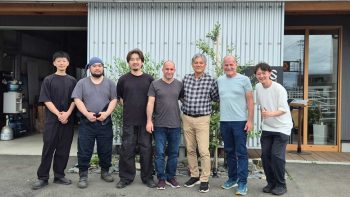
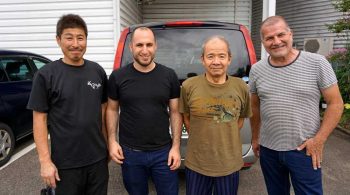
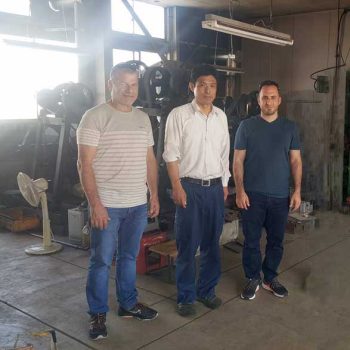
By 2017 we were visiting makers and workshops in Japan, including Yu Kurosaki, Hiroshi Kato, Sukenari, Shungo Ogata, Yamawaki and other specialists around the Japanese knife industry.
We traveled to the Frankfurt trade exhibition to meet several of the knife manufacturers and suppliers we worked with in person.
Another supplier trip included visits to Katsuto Tanaka as well as Tosa, Seki Kanetsugu, Zanmai and Shizu Takumi, covering very different scales and styles of Japanese knife production.
Our travels again included direct workshop visits, including Katsuto Tanaka and the Matsubara team, along with the BTN workshop in Vietnam.
Hikari remains focused on high-performance kitchen knives, advanced steels and the details that separate an ordinary knife from an exceptional one.
AT THE SOURCE
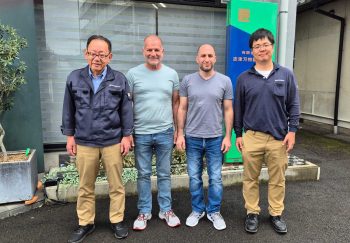
Over the years we have spent time in workshops, factories and knife-making regions in Japan. Seeing how different makers work gives useful context that cannot be learned from specifications alone.
WHAT EXPERIENCE CHANGES
Working with Japanese knives for years changes what you notice and what you ask before deciding whether a knife belongs in the catalog.
Who made the knife, how it is constructed and how consistently that workshop executes its work matter as much as the specification sheet.
We have worked across traditional carbon steels, conventional stainless steels and modern powder metallurgy. Steel matters, but only when heat treatment and geometry allow it to perform.
Years of sharpening high-performance knives on Japanese waterstones give us another way to understand steels and edges: how quickly they abrade, how they respond on the stones and how the finished edge behaves.
We continue to publish the information we would want when evaluating a knife ourselves: steel, hardness, dimensions, thickness, weight, construction, grind and other relevant details.
HIKARI TODAY
Hikari continues to specialize in high-end Japanese kitchen knives and the makers behind them. The wider business remains deeply connected to the Japanese knife industry, from established manufacturers to small workshops and individual craftsmen.
Our international catalog currently centers on BTN, but the standards we apply to those knives come from the same background: years of comparing Japanese steels, geometry, grinds, construction and workmanship at a very high level.
The objective has stayed remarkably consistent since 2015: understand the knives properly, choose products we believe in, publish the details and give customers enough real information to make an informed choice.
For us, Japanese knives became a long-term specialty. The relationships, workshop visits, steel knowledge and sharpening experience accumulated over the years are now part of how we evaluate every knife we offer.
HIKARI CHEF KNIVES
From traditional workshops in Japan to modern high-performance steels, knives have been our specialty from the beginning.